
Leave a Review


How quickly the technology world has evolved! Only a few years ago, generative AI entered the spotlight. Since then, artificial intelligence has begun transforming virtually every industry.
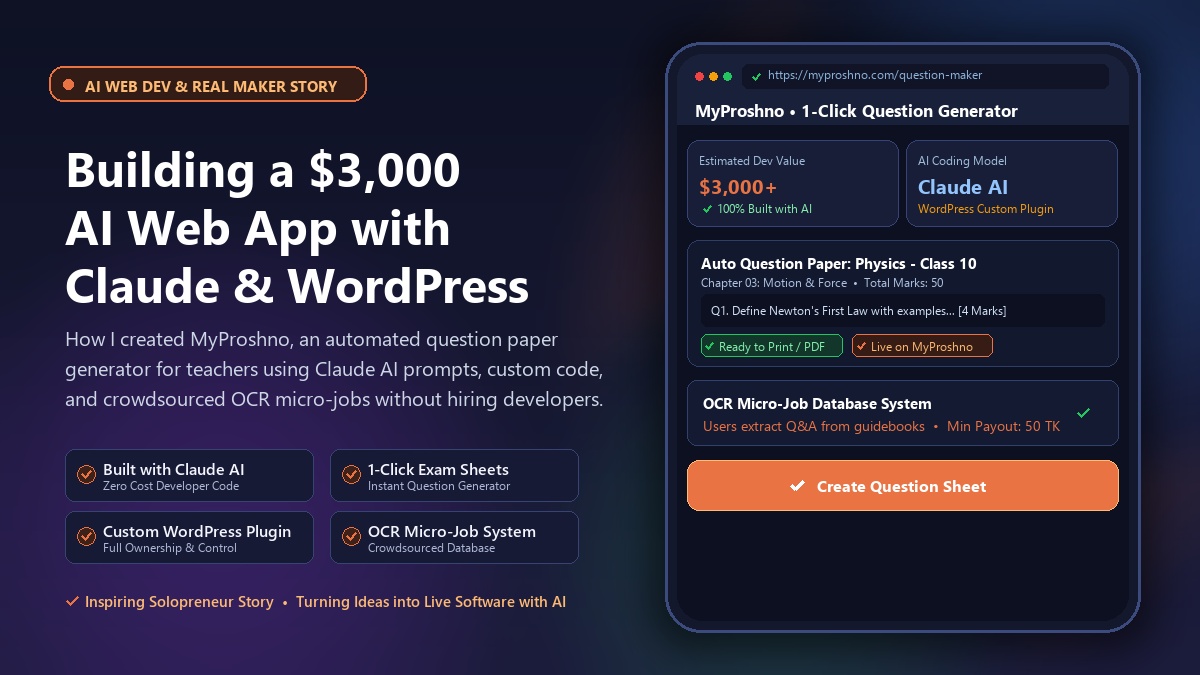
It might sound unbelievable, but I developed a full-featured web application using AI assistance for coding features that would have easily cost upwards of $3,000 if outsourced to external software agencies. Beyond saving costs, building it myself gave me complete freedom to tailor every functionality to exact specifications.
A few years ago, I worked as a computer operator at an academic coaching center. Every single day, I spent nearly three hours manually compiling, formatting, and proofreading exam question papers—a repetitive, time-consuming challenge faced by schools, colleges, and coaching academies nationwide.
During that time, I stumbled upon a question-bank website that piqued my curiosity:

The core concept was straightforward yet brilliant: textbook and guidebook questions categorized by class, subject, and chapter. Teachers could select the chapters they needed, click next, and generate a customized question sheet within seconds.
Having experienced the pain point firsthand, I recognized the immense value in solving this problem. That sparked my ambition to build an AI-assisted web application to empower educators with automated question creation.
While the reference platform was likely built on Laravel, I chose WordPress because of my deep familiarity with its ecosystem and plugin architecture. I began prototyping locally.
After testing different AI models, I found that Claude AI offered superior code reasoning and architectural design for custom PHP plugins. Over the course of a month, I paired with Claude to write the complete backend logic for 1-click question paper generation.
Once the local plugin was tested and stable, I secured the domain and launched the web app live at myproshno.com:
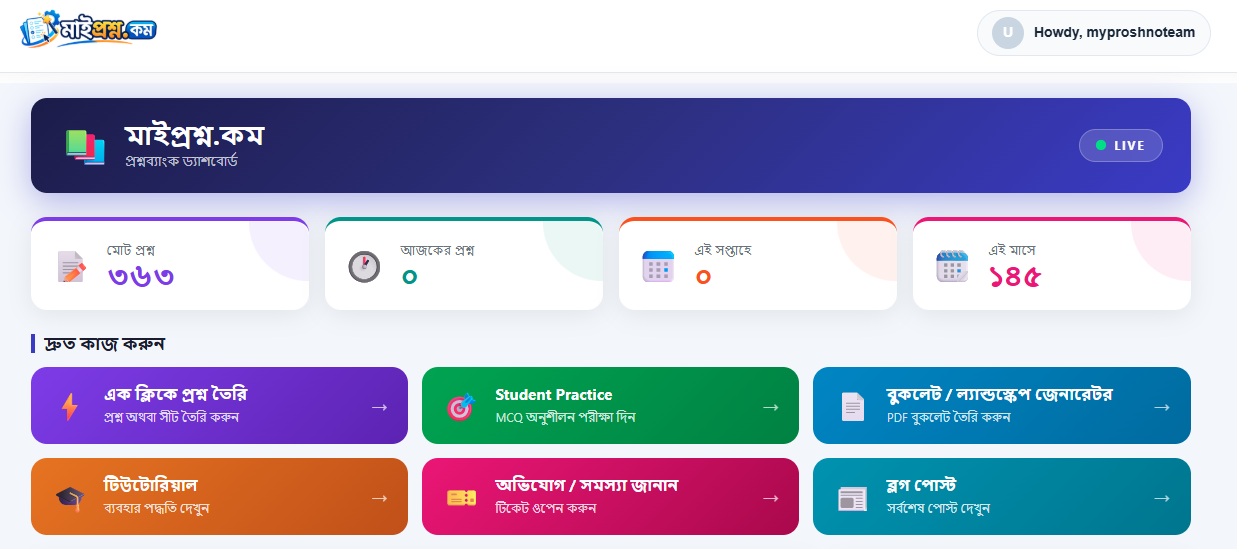
When users navigate to the question maker interface, they encounter a streamlined setup workflow:

Teachers select their target class, subject, exam duration, total marks, and institute branding details:

Next, the system surfaces relevant multiple choice questions (MCQ) and creative questions filtered by syllabus chapters:

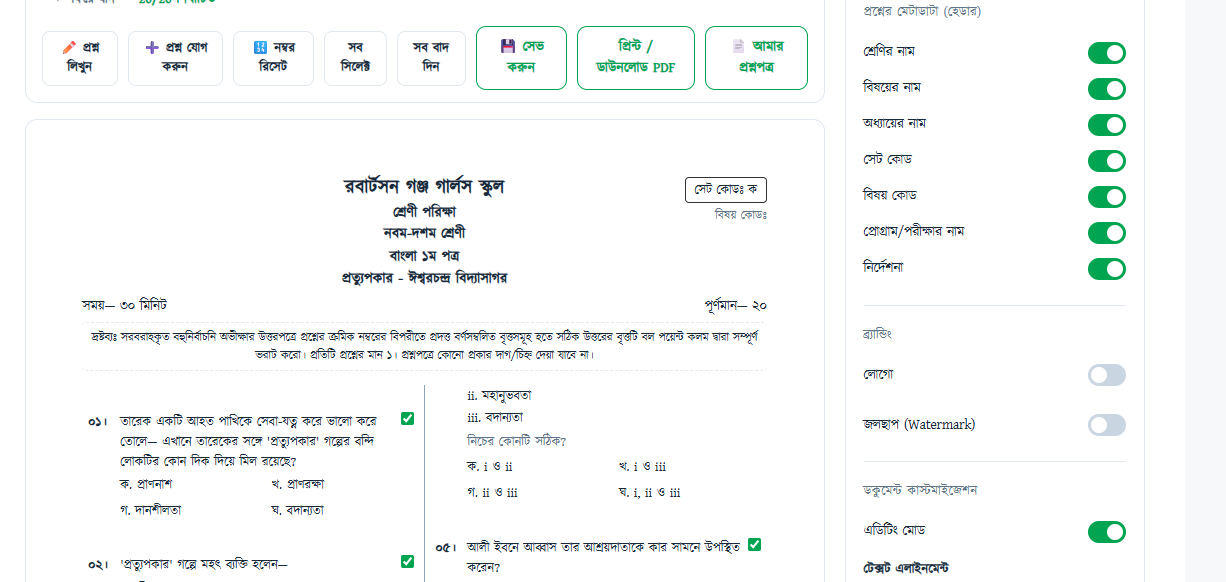
Clicking continue produces a beautifully formatted question paper layout ready for instant editing or PDF printing:
While the software performed flawlessly, a major operational hurdle arose: manually digitizing thousands of questions and answers across diverse grades and subjects was impossible for a solo creator.
To overcome this, I developed an in-house Micro-Job System right inside the platform:
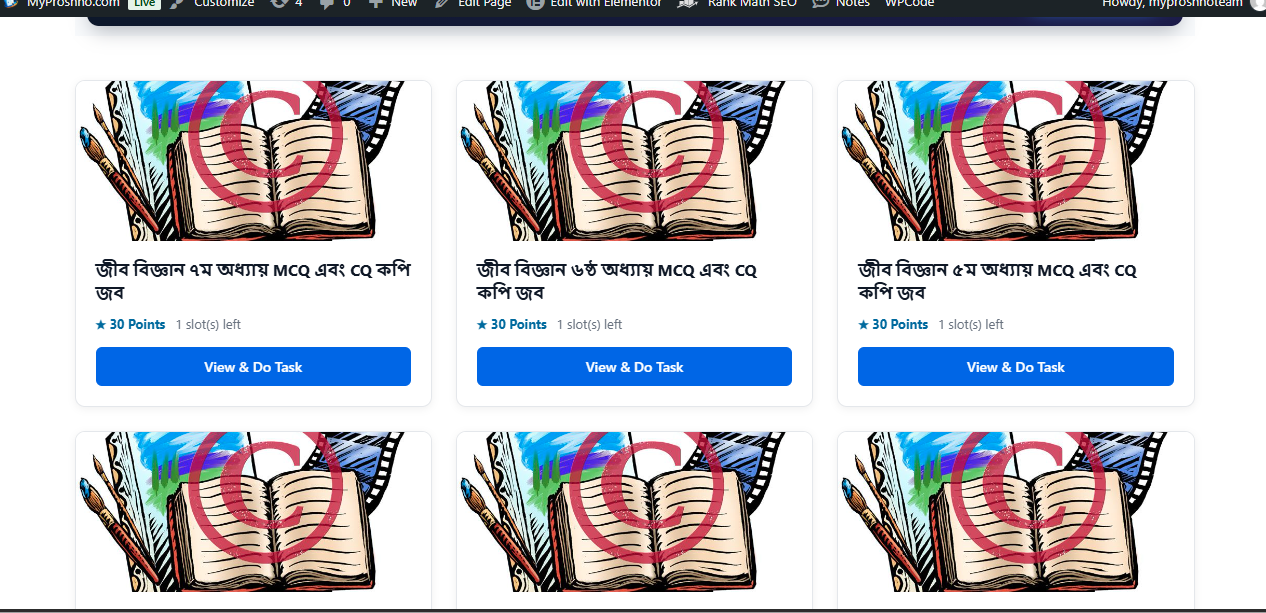
Users and students can extract questions from physical guidebooks using OCR tools, input them into the database, and receive payouts (with a minimum cashout of 50 taka). This created a mutually beneficial ecosystem: users earn micro-income, while the platform's question bank expands rapidly.
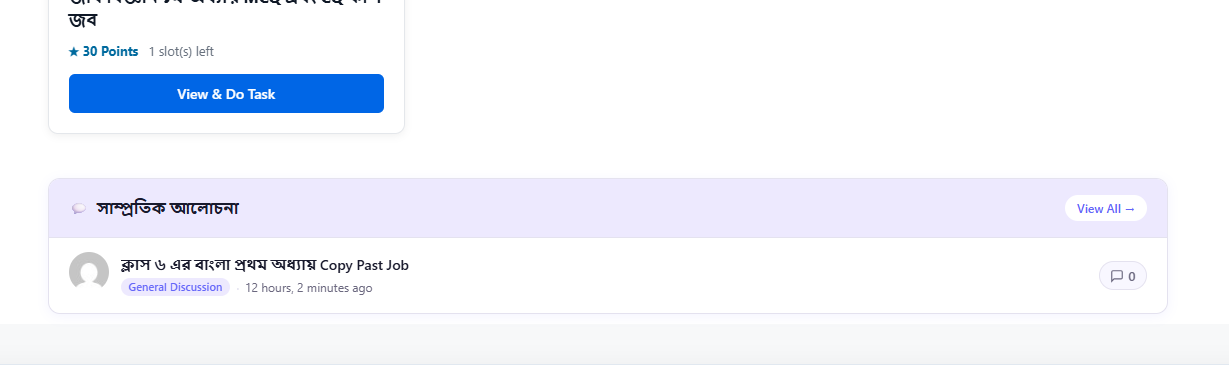
I also integrated a community forum where contributors can discuss queries, report issues, and collaborate.
Many people have great ideas, but turning them into functional reality is where the magic happens. The day I held the first printed demo exam paper generated by my own AI-crafted software was immensely rewarding.
With modern AI assistants like Claude, you no longer need an enterprise budget or a full engineering team to build impactful digital solutions. All you need is persistence, domain understanding, and creative problem-solving.
Have you built or dreamed of creating something using AI? Share your story in the comments below!