
Leave a Review

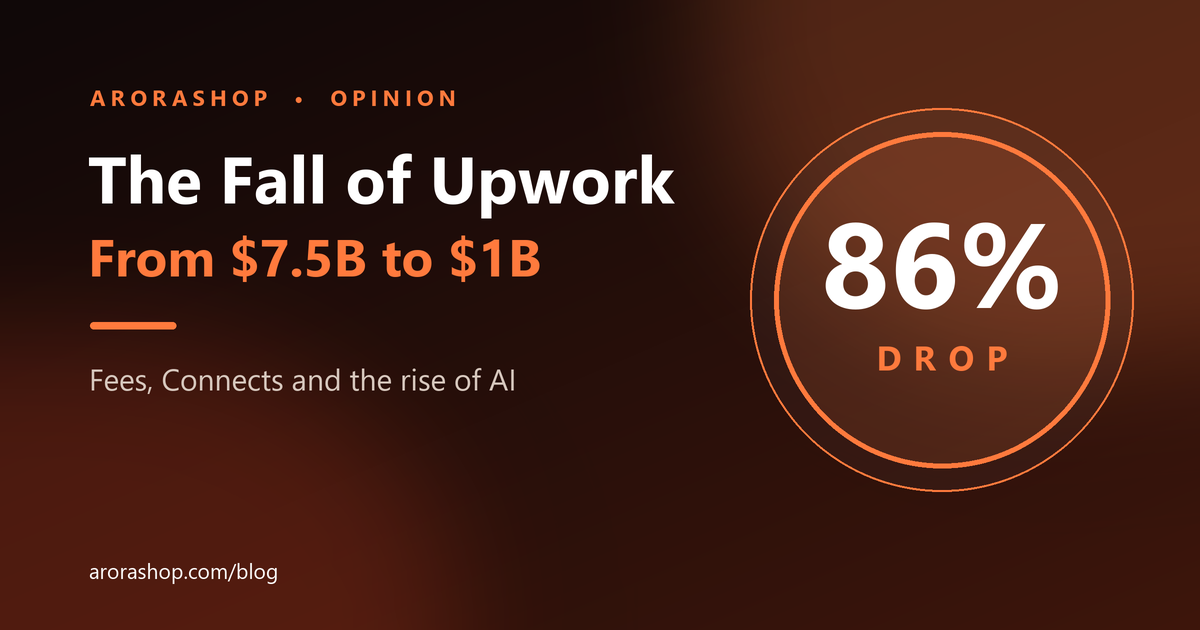
Upwork is once the largest and most popular freelancing platform in the world. For thousands of young people, it was a safe place to work and dream. But today? Today, that familiar upwork is like dust. Their revenue line has stalled, with market cap plummeting 86% from $7.5 billion to just under $1 billion. The company is forced to lay off workers en masse.
And the most disappointing thing is that no outside competitor is responsible for this decline, but Upwork itself. This is exactly what happens when you try to squeeze every penny out of your most loyal users. Today, let's talk about the unknown story behind the downfall of Upwork, which is the story of every freelancer's pent-up anger.
Let's look back a little. In the 2010s, remote work or working from home was not as common as it is today. Clients don't understand how to manage a person who is sitting thousands of miles away! Did he really work for 10 hours, or just 2 hours and did other work the rest of the time?
To solve this problem, Upwork (then called Elance-ODesk) came up with time tracking, activity logs, and screenshot features. While this may seem a little annoying to many, at the end of the day it protects the freelancers. In the words of one freelancer,
"I've only had a dispute with a client about work hours once. And I won because screenshots of my work proved I was actually working on his project."
Back then the rule for freelancers was very simple and nice flat 10% commission on any job. Everyone is happy! But, this good form of Upwork did not last long.
In May 2016, CEO Stefan Kasriel introduced a new rule of 'sliding fees'. The fee is 20% on the first $500, 10% between $500 and $10,000 and only 5% above.
Sounds like a concession to many, right? But the reality was grim. Most of the work at Upwork was small projects—like creating a logo, fixing a website, or writing a script. As a result, most of the freelancers could not pass the $500 income threshold from one client. The sword of that 20% fee continued to hang on their necks for life. Not only this, clients are also charged a processing fee of 2.75%.
Then came the most painful chapter 'Connects'. Previously, freelancers could send job proposals at will. But the new rules forced them to buy virtual tokens called Connects. 10 Connects were to be purchased for $1.61. It used to take 7 to 25 connections to apply for a good job! Imagine, you are paying to apply for a job, but there is no guarantee that you will get the job or not!
Gradually the number of free connects was reduced from 60 to 20. And the Upwork authority started to say with a strange logic, "It will be good for freelancers, the competition will decrease!" It's like when you submit your CV to bdjobs, money is deducted from your pocket, and it says it's for your own good!
When the entire world came to a standstill during the Covid-19 pandemic, there was an unprecedented surge of remote work. Statistics say that at that time, almost half of the young people of the Gen-Z generation entered this profession. Upwork's revenue skyrocketed—from $300 million to $500 million! Shares rose to $60.70.
From the outside, it seems that Upwork is at the peak of success! But the news inside was different. Despite all this revenue, Upwork was not seeing any profit. And to please investors they started a new steamroller on freelancers.
In April 2023, they reverted back to the previous flat 10% rule. While this is good news for newbies, those who have sweated for years to get to the 5% fee level are in for a shock! Their fees doubled overnight. Because Upwork realized, these top-rated freelancers make the most money. Upwork has done a disservice to their most loyal users.
The last dam of freelancers' patience breaks in 2025. Upwork also cancels the 10% rule and brings a hidden algorithm 'Variable Fee'. Now the fee will be between 0% to 15%, which depends on the market demand, your skills and their own secret algorithm.
The worst thing is, you never know what percentage of the fee will be deducted from you before you submit the proposal! There is no transparency. Even if two freelancers apply for the same job, their fees may differ. They advertised “0% fee”, but in reality most freelancers were charging 10-15% fee. It's the anger of buying Connects, the fee for withdrawing money from the job, and the anger of this unknown percentage on the income!
Clients were not at peace either. To hire a freelancer for a job, they had to pay a subscription fee, a processing fee, and a newly added contract fee of $4.95. As a result, a kind of bitterness was created between both the client and the freelancer.
In the first quarter of 2026, Upwork's growth was only 1%. Their golden days are over. In May they announced layoffs of 24% of their company's workforce (about 145 people).
Imagine, you spent hours and hours writing a beautiful proposal. He spent his money and deposited it using Connects. But after a few days saw, the client did not even open your proposal!
Meanwhile, freelancers are not sitting still. Many more new and transparent platforms have come into the market. Freelancers are flocking to those platforms leaving Upwork. And the final nail in the coffin has been driven by AI. Writing on Upwork has dropped by about 32% since ChatGPT arrived. The entry-level jobs that were the foundation of the platform are all but extinct today.
Looking at Upwork today is really painful. What was once the best platform today is simply costing too much greed and bad decisions. With their market cap bottoming out, investors are turning away. The trap they created by annoying both clients and freelancers, is the same trap they find themselves in today. People are now turning towards new, transparent and better options. Maybe it was meant to be. Because, those who do not know how to respect their backbone i.e. freelancers, their downfall is certain.